Scale
Roughly ten million billion mitochondria in your body.
Wallace, JCI 2013

Micronutrition
the other invisible population keeping us alive
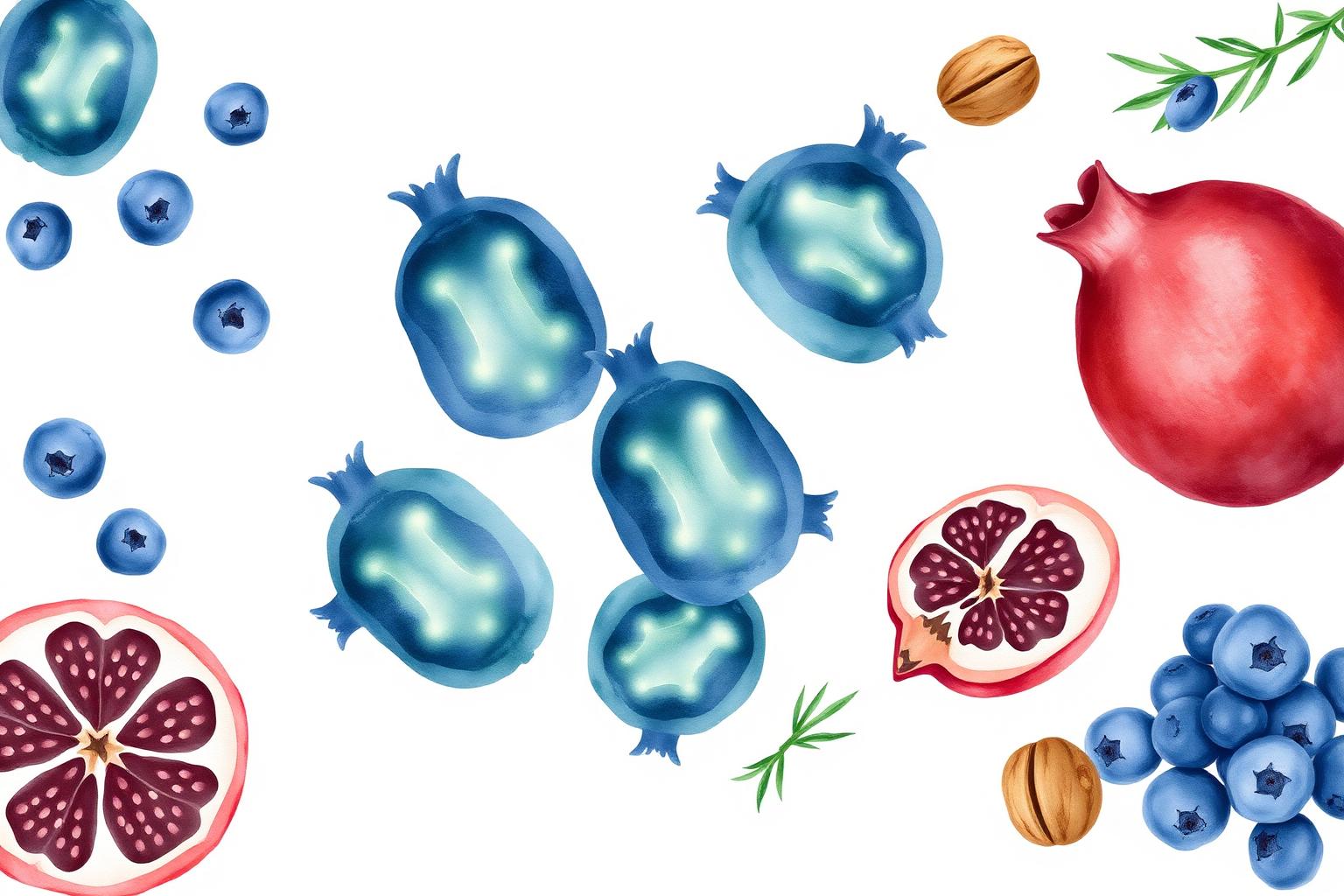
You host roughly ten million billion mitochondria. Picture them as tiny power plants tucked inside every one of your cells. What they produce: ATP, the rechargeable battery that beats your heart, fuels your thinking, contracts your muscles. We often discuss the gut microbiota, that crowd of bacteria living in our intestines. We rarely discuss the mitobiota, the other crowd, this one inside our cells. An evolutionary curiosity: these power plants descend from ancient bacteria swallowed two billion years ago, and to this day they keep up a constant dialogue with the bacteria in your gut.
Roughly ten million billion mitochondria in your body.
They produce the ATP beating your heart and powering your brain.
Microbiota and mitochondria talk constantly via SCFAs and LPS.
Biogenesis and mitophagy are stimulated by exercise, fasting, cold.
CoQ10, magnesium, NAD+, polyphenols and omega-3 support function.
A mitochondrion in trouble means a cell producing less energy, releasing more 'smoke' (the famous free radicals) and eventually lighting a small fire of inflammation. Chronic fatigue, exercise intolerance, brain fog, metabolic disturbances: the signature of struggling power plants is everywhere, yet rarely named. Age, everyday pollutants, certain drugs, a sedentary lifestyle and ultra-processed food all weaken these plants.
The good news: mitochondria are strikingly adaptable. They multiply (biogenesis, the birth of new plants), clean themselves up (mitophagy, the recycling of tired ones), and renew in response to physical exercise, intermittent fasting, cold exposure, and a few specific nutrients: coenzyme Q10, magnesium, NAD+, polyphenols (green tea, berries, cocoa), omega-3.
Your gut bacteria produce a whole range of small molecules that speak directly to your power plants: short-chain fatty acids (the preferred fuel of colon cells), fragments of bacterial envelope (the well-known LPS), and vitamins. Conversely, healthy mitochondria help maintain the gut lining. Tending one without the other is like watering only half of your garden.
The exploration below walks through this physiology step by step: what a mitochondrion looks like from the inside, how it talks with the microbiota, the practical levers, and the biomarkers worth knowing.
A guided exploration to understand what your mitochondria do and how to support them.
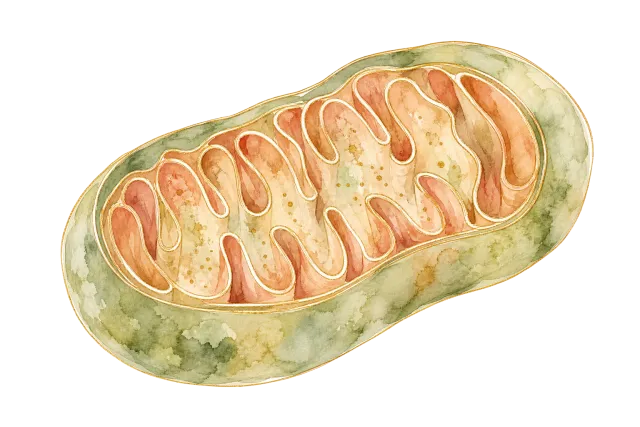
You have heard of the microbiome, that community of bacteria that governs much of your health. But did you know your cells host another empire, just as decisive, that orchestrates your vitality, your mood and your mental clarity?
All information in this exploration is drawn from peer-reviewed scientific publications. Links to those papers are listed at the end of the topic.
This exploration is educational. It does not replace medical advice. Any supplementation or treatment change should be discussed with a healthcare professional. Terms and conditions →
Ce site utilise des cookies et collecte des données (e-mails, progrès dans les explorations) pour améliorer votre expérience. Lire notre politique de confidentialité.