Nutrilexic

    Micronutrition · Practical guide

    Which magnesium to choose for your situation?

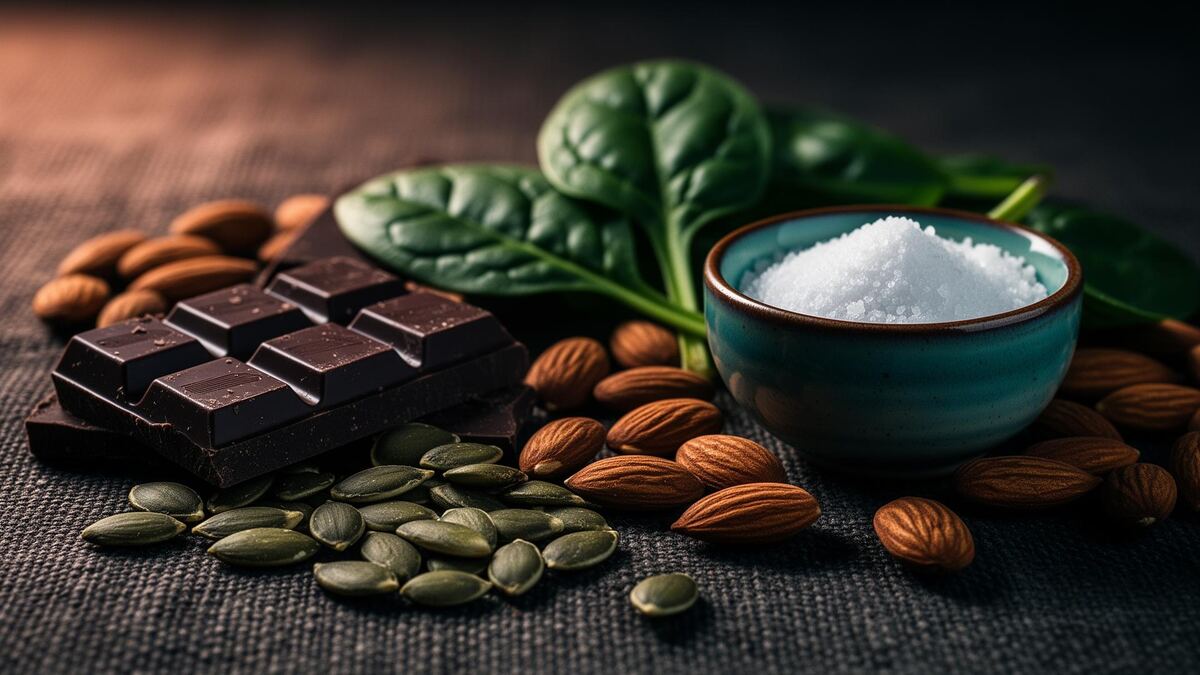
    Dark chocolate, almonds, pumpkin seeds, spinach and salt: magnesium-rich foods

    Magnesium is not a single molecule. Depending on which transporter it is bound to (orotate, bisglycinate, citrate, threonate, malate, glycerophosphate), it travels to different parts of the body and does different jobs. This guide helps you pick the most relevant form for your situation, based on available scientific literature.

    Pomegranate and beetroot: heart and circulation foods

    Indication 1/5

    Heart and circulation

    Fragile heart, arrhythmia

    Form: OrotateEvidence: Strong

    Orotate is the most studied form in cardiology. It helps the heart muscle produce energy and stabilises the electrical currents that pace the heart. A trial in severe heart-failure patients showed clearly better survival on orotate vs placebo.

    Always under medical supervision.

    High blood pressure

    Form: Glycerophosphate or citrateEvidence: Good

    Magnesium relaxes the small muscles around blood vessels. Well-absorbed forms (glycerophosphate, citrate) are preferred for a modest but real effect on blood pressure.

    300 to 400 mg/day, preferably in the evening.

    Walnuts, blueberries and cacao: brain foods

    Indication 2/5

    Brain and migraines

    Memory, decline prevention

    Form: L-threonateEvidence: Good

    L-threonate is the only form that truly enters the brain. It densifies neuron connections, especially in the hippocampus (memory seat). Several trials show effects on working memory.

    1.5 to 2 g L-threonate in the evening.

    Migraines

    Form: Citrate or bisglycinateEvidence: Strong

    Magnesium calms the electrical surge in the brain that triggers attacks. Cochrane and the American Headache Society recommend it as prevention. Effect visible after 8 to 12 weeks of regular intake.

    400 to 600 mg/day continuously.

    Chamomile and lavender infusion by the bedside

    Indication 3/5

    Sleep and nervousness

    Sleep, night awakenings

    Form: Bisglycinate + L-threonateEvidence: Good

    Bisglycinate also delivers glycine, an amino acid that promotes the slow waves of deep sleep. L-threonate improves overall sleep quality. The two combine well.

    Bisglycinate 200-300 mg + L-threonate 1 g, 1 h before bed.

    Anxiety, mental overload

    Form: Acetyl taurinate or bisglycinateEvidence: Good

    Acetyl taurinate reaches brain tissue directly thanks to its fat solubility: an ally on days of mental overload. Bisglycinate soothes the nervous system more broadly.

    200 to 400 mg/day depending on form.

    Green apple, spinach and parsley: malate sources

    Indication 4/5

    Muscles and energy

    Fatigue, fibromyalgia

    Form: MalateEvidence: Moderate

    Malate directly fuels cellular energy production. The most logical form when fatigue runs deep. Mechanism is solid, clinical evidence still maturing.

    300 to 400 mg/day, away from meals.

    Cramps, athletic recovery

    Form: Bisglycinate or malateEvidence: Good

    Without magnesium, muscles become hyperexcitable (cramps, fasciculations). Bisglycinate refills cells well; malate also helps clear lactic acid after exercise.

    300 to 400 mg/day, split morning and evening.

    Lemons and limes cut open: natural citrate

    Indication 5/5

    Transit and digestion

    Constipation, oxalate stones

    Form: CitrateEvidence: Strong

    Citrate draws water into the colon: it softens stools and restarts transit. It also traps dietary oxalates, lowering the risk of kidney stones. The best-documented form for both uses.

    200 to 400 mg/day, adjust to response.

    Constipation and FUT2 profile

    Form: Citrate + fucosyllactoseEvidence: Moderate

    People carrying the FUT2 non-secretor variant have fewer good bacteria (bifidos) and a tendency to constipation. Citrate helps, but adding a targeted prebiotic rebalances the terrain at depth.

    A genetic test confirms this terrain.

    Sensitive gut

    Form: GlycerophosphateEvidence: Good

    Glycerophosphate is the best-tolerated form for fragile guts: side-effect rates comparable to placebo. The reference choice when you must supplement without triggering irritation.

    300 to 400 mg/day, mid-meal.

    Lab quality

    Form is not enough. Lab quality matters just as much.

    Picking the right form is half the job. The product must actually contain what is stated, without contaminants or problematic excipients. The market has over 400 brands, and regulation is far looser than for medicines.

    GMP certification

    Good Manufacturing Practices ensure each step is documented and audited. The minimum to require. Few brands actually show it.

    Third-party lab analyses

    A serious lab publishes analyses done by a third party: actual composition, no heavy metals. Without accessible documents, move on.

    Raw material origin

    European or Japanese manufacturing applies stricter standards. Traceability must run from mineral source to finished product.

    Transparent label

    The exact chemical form and elemental magnesium dose must appear. A short, readable ingredient list is a good sign.

    Careful galenic form

    Prefer HPMC plant-based capsules. Effervescents absorb well but often contain flavours and sweeteners.

    Elemental magnesium

    The displayed weight often refers to the total salt, not absorbable magnesium. Check: 500 mg of oxide is not 500 mg useful.

    Reading a label

    Excipients: what you should be able to read

    Status Name Explanation
    Avoid Magnesium stearate (E572) Industrial anti-caking agent. May form a film slowing active ingredient absorption.
    Avoid Titanium dioxide (E171) White colourant banned in French food since 2020 (suspected genotoxicity). Avoid.
    Avoid Maltodextrin, dextrose Filler sugars often from GMO corn. Add nothing useful.
    Avoid Synthetic flavours and sweeteners Aspartame, sucralose, acesulfame K: signal of poor formulation, disrupt the microbiota.
    Acceptable Silicon dioxide (E551), microcrystalline cellulose Anti-caking agents well tolerated at standard doses.
    Preferred HPMC capsule, plant cellulose Quality standard: no animal gelatin, no colourant, no common allergen.

    Take-aways

    Before buying: 5 reflexes

    1. 1

      Check the exact form: bisglycinate, malate, threonate, citrate, orotate. Not just "magnesium".

    2. 2

      Look at elemental magnesium: the only value your body actually uses.

    3. 3

      Read the full ingredient list. Look for E572, E171, maltodextrin.

    4. 4

      Look for GMP certification or a third-party analysis. Without transparency, move on.

    5. 5

      Beware of very low prices: quality magnesium has a real cost. Too cheap = mediocre oxide.

    Ce site utilise des cookies et collecte des données (e-mails, progrès dans les quiz) pour améliorer votre expérience. Lire notre politique de confidentialité.