
Thyroid: understanding the gland that orchestrates your rhythm
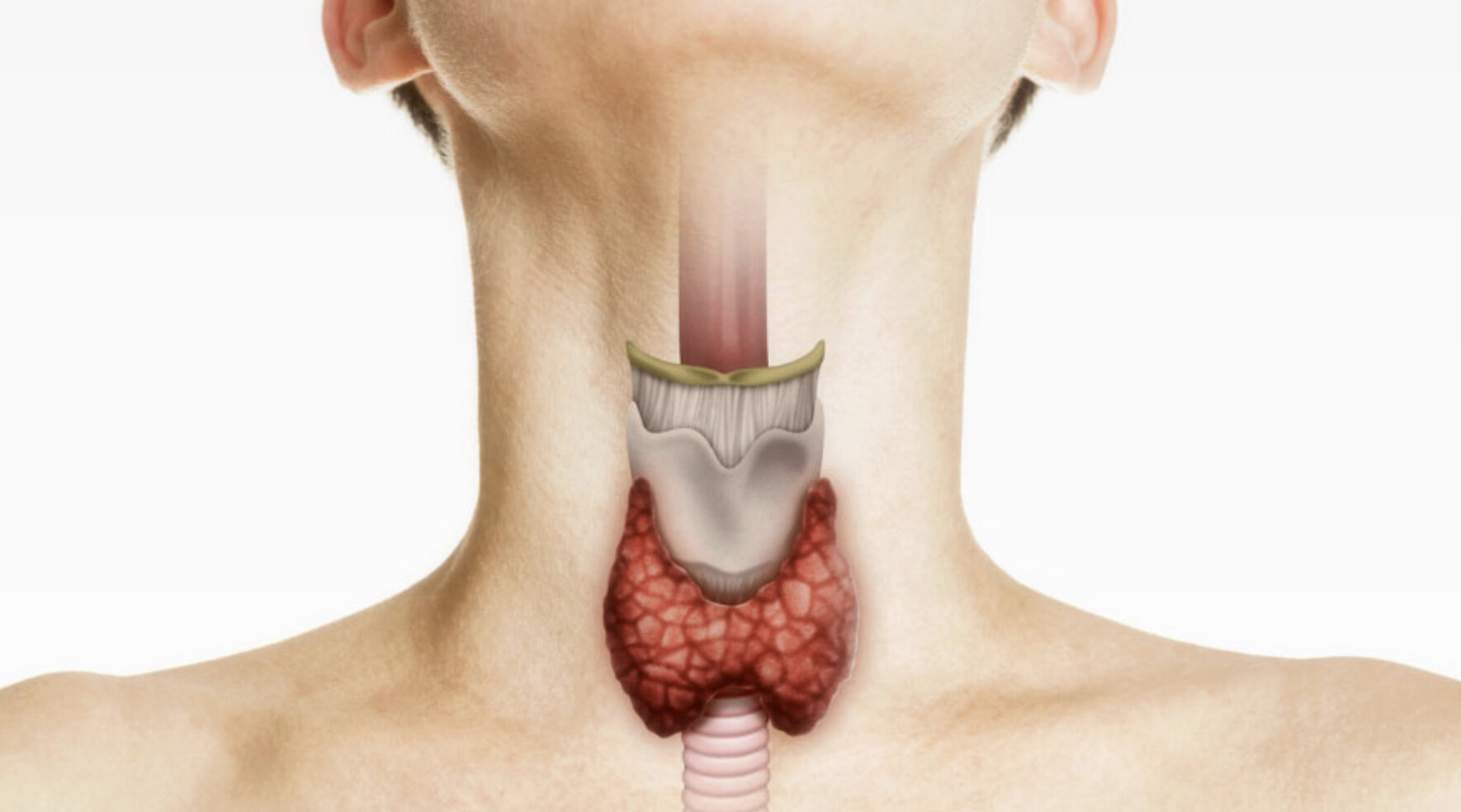
The thyroid is arguably the most misnamed gland. People talk about "thyroid problems" the way they talk about the weather, without ever specifying what they actually mean. Yet this small 20-gram organ sets the internal tempo of the whole body: heart rate, body temperature, gut transit, memory, menstrual cycle, mood.
Hypothyroidism, hyperthyroidism, Hashimoto's, nodules, TSH too high or too low: the terms circulate, but their meaning often stays hazy. This exploration lays the foundations: what the thyroid actually does, how to read a lab panel without getting lost in acronyms, and which signals justify deeper investigation.
Peer-reviewed sources, informed by the clinical experience of naturopaths.
Role of the gland
What the thyroid produces, what T3 activates in your cells, why iodine is not taken on its own.
The silent metronome
The thyroid, a small butterfly-shaped gland nestled at the base of the neck, produces two hormones — T4 (thyroxine) and, in smaller amounts, T3 (triiodothyronine). Their role goes far beyond "managing metabolism": they set the pace at which every cell breathes, burns and renews itself.
Heart, gut, skin, brain, muscles, menstrual cycle, mood: almost nothing escapes their influence. When they slow down, everything slows down. When they race, everything speeds up.
Reading a thyroid panel
TSH, FT4, FT3, anti-TPO antibodies: what each marker says, what it does not say.
TSH: the order from above
TSH (thyroid-stimulating hormone) is produced by the pituitary, not by the thyroid itself. It acts as a thermostat: when thyroid hormones drop, the pituitary raises TSH to stimulate the gland; when they are sufficient, TSH falls.
Usual "lab" reference range: 0.4 to 4.0 mIU/L. But several scientific societies (notably in the US) consider that above 2.5 mIU/L in a symptomatic woman or one planning pregnancy, the picture deserves closer investigation.
Warning signs
Hypothyroidism, hyperthyroidism, when to ask for a test: a five-situation guide.
Hypothyroidism: when everything slows down
Fatigue that rest does not relieve, persistent cold sensitivity, unexplained weight gain, constipation, dry skin, hair loss, low mood, cognitive fog, longer menstrual cycles: no single symptom is diagnostic, but their clustering justifies a TSH test.
In perimenopausal women, these signals overlap with those of the hormonal transition — hence the value of a lab work-up rather than symptom-only interpretation.
Where the thyroid meets your terrain
Hashimoto's and thyroid autoimmunity, evidence-informed herbal support, everyday endocrine disruptors and their impact on thyroid function.
Access to all Nutrilexic articles for 7 days · €5. (validated against the latest certified, peer-reviewed scientific publications)


This page is educational and does not replace individual medical advice. Any confirmed thyroid imbalance calls for medical follow-up; herbal medicine is not self-prescribed while a hormonal treatment is under way. Terms and conditions →