Five minerals
Sodium, potassium, magnesium, calcium, chloride: all electrically charged.
Nutrilexic synthesis

Micronutrition
Brain, heat and climate
Electrolytes are not a sports-only topic. They are electrically charged minerals (sodium, potassium, magnesium, calcium, chloride) that circulate in every body fluid. Every heartbeat, every thought, every muscle contraction depends on their movement across cell membranes. When the balance falters, the brain slows down, muscles cramp, fatigue sets in. And with a warming climate, this balance is becoming harder to hold.
Sodium, potassium, magnesium, calcium, chloride: all electrically charged.
Every heartbeat and every thought depends on their movement across membranes.
Drinking too much plain water without salt can dilute sodium: hyponatremia.
Higher intakes lower blood pressure and cardiovascular risk.
The past ten years are the warmest on record.
Each cell in your body works like a tiny battery. Inside: potassium. Outside: sodium. This difference in concentration creates an electrical charge: the membrane potential. Without it, no nerve transmits, no muscle contracts, no cell renews properly. Electrolytes are the agents of this continuous current.
The topic is often raised in the context of sport or heatwaves, but the stakes are broader: sleep, focus, mood, blood pressure, digestion. All of it runs through them.
Recommended daily intakes below are adult ranges (ANSES/EFSA/WHO), to be adjusted for age, activity and climate.
Exercise-associated hyponatraemia can be fatal, and it is often mistaken for dehydration. A runner or hiker, feeling the first signs (dizziness, nausea, confusion), then drinks more plain water. The reflex seems right but further dilutes blood sodium and worsens the picture. The rule: in heavy heat or long effort, drink and salt, not just drink.
When a neuron transmits a signal, it triggers an action potential: an electrical wave that travels along the axon. This wave relies entirely on a sudden influx of sodium and an efflux of potassium across the membrane. Conduction speed varies hugely with fibre type: large myelinated fibres (motor neurons) can reach 120 m/s, but most cortical neurons run between 0.5 and 10 m/s. It is this current, multiplied by billions, that becomes a thought, a gesture, a heartbeat.
At rest, the magnesium ion (Mg²⁺) physically blocks the NMDA receptors of neurons, like a plug in a lock. When the cell depolarises, meaning a signal arrives, this magnesium is expelled, the channel opens, calcium flows in, and memory is laid down. This is precisely where learning happens. Chronically low magnesium leaves a brain that over-excites its circuits: insomnia, heightened stress reactivity, difficulty holding focus.
Sweat is a hypotonic fluid: it contains a lot of water and relatively little sodium. Counter-intuitive consequence: during heavy sweating (long effort, sauna, heatwave), you lose proportionally more water than sodium, and the sodium concentration in the blood (natraemia) tends to rise. The body then feels thirsty. But drinking plain water alone deepens the imbalance. This is the same logic that makes exercise-associated hyponatraemia so dangerous.
Calcium is not just a bone mineral. It is an intracellular messenger: its transient entry into the cell triggers muscle contraction, neurotransmitter release, and gene activation. Vitamin D regulates intestinal calcium absorption and activates receptors (VDR) present on nearly all our immune cells. A vitamin D deficiency, common in northern winters, ripples through the whole electrical network.
According to the World Meteorological Organization, the ten warmest years on record are the past ten years (WMO 2025). For human physiology, this changes the picture. Above 35 °C (95 °F), evaporative thermoregulation becomes the only effective way to cool the body. And sweating means losing water and electrolytes, exactly what the heart, muscles and brain rely on.
People over 65 are particularly vulnerable: thirst perception declines with age, kidney function concentrates urine less effectively, and common medicines (diuretics, antihypertensives) increase losses. A study by Falchetta et al. (Nature Communications, 2024) projects a fourfold increase in older adults' exposure to extreme heat by 2050.
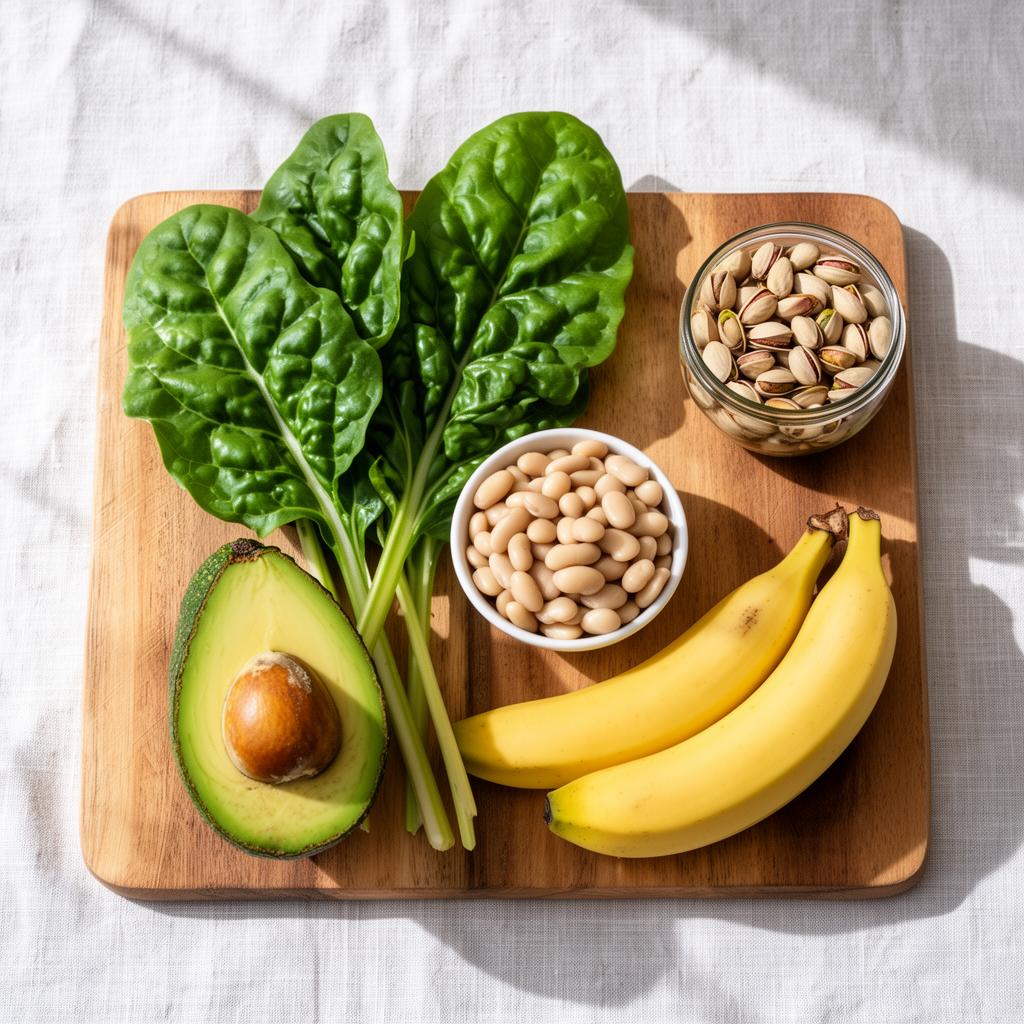
Over-the-counter potassium supplements are legally capped at 99 mg per dose, less than 3% of the recommended daily intake. There is a reason: a rapid bolus of pure potassium can trigger cardiac rhythm disturbances. Nature does better: fruit, vegetables and pulses deliver potassium bound to fibre, polyphenols and water, released gradually during digestion. A banana provides 400 mg, an avocado 700 mg, a portion of lentils 600 mg, a handful of cooked spinach 800 mg. It is this slow-release pattern that protects the heart, not the dose alone.
Meta-analyses converge (Aburto et al., BMJ 2013; PURE study, NEJM 2014): it is potassium-rich dietary patterns that reduce cardiovascular mortality, not isolated supplementation.
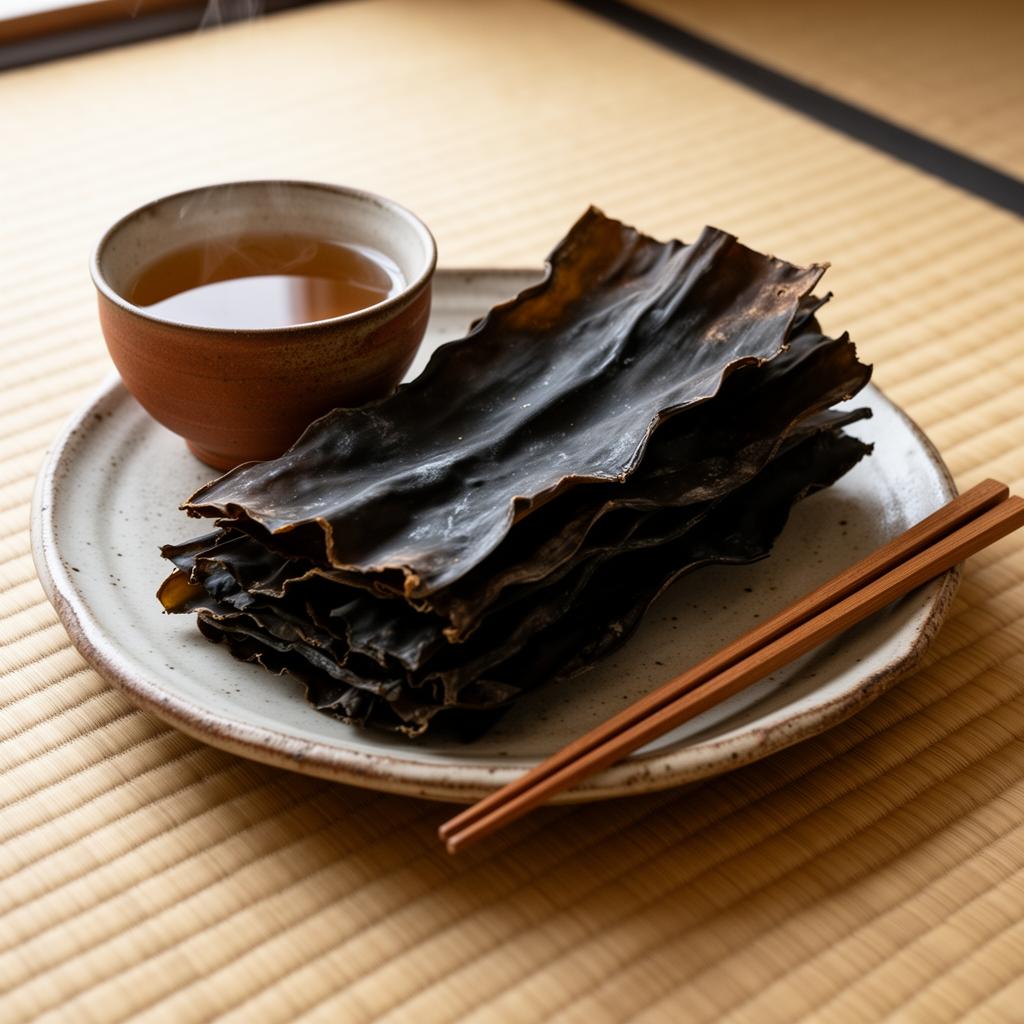
In Japan, the kombu seaweed (Saccharina japonica) is steeped in cold water for several hours to make dashi, the base stock of traditional cooking. Cold-brewed, kombu releases its minerals (potassium, magnesium, calcium, iodine) without bitterness or excess sodium. This is not a standard clinical rehydration strategy, but it is an interesting example of a naturally mineral-rich drink rooted in a food culture. Conversely, the much-praised pink Himalayan salt does not contain the iodine found in iodised table salt, a trade-off worth knowing.
4 questions. One minute.
Bisglycinate, malate, citrate, oxide, liposomal, the forms are not equivalent. A dedicated exploration.
This page is educational. Recommended intakes are orders of magnitude. In case of cardiac or renal disease, diuretic treatment or prolonged effort, please ask your healthcare professional. This content is not intended to diagnose, treat, cure or prevent any disease. Terms & disclaimer →
Ce site utilise des cookies et collecte des données (e-mails, progrès dans les explorations) pour améliorer votre expérience. Lire notre politique de confidentialité.