
The cocktail that shifted biology
In 2006, Japanese researcher Shinya Yamanaka showed that introducing just four proteins into an adult skin cell was enough to send it back to a state, capable of becoming anything: a neuron, a heart cell, a liver cell. These four proteins, Oct4, Sox2, Klf4 and c-Myc, have had a name ever since: the Yamanaka factors, or OSKM. The discovery earned Yamanaka the 2012 Nobel Prize in Medicine, shared with John Gurdon. What no one expected at the time: the same cocktail, used differently, has become one of the most closely watched bets in ageing research.
The short version that does not make a stem cell
These are in vitro and mouse approaches for now. But a first human clinical trial targeting the brain received regulatory clearance in 2025. One to watch.
Prolonging exposure to the Yamanaka factors for too long turns an ordinary cell into a , a cell that has lost all specialisation and regained the ability to become any cell type, a neuron, a muscle cell, a liver cell. It is the state cells are in at the very earliest stage of an embryo, before each receives its final instructions and becomes what it has to be. That is precious in the lab, but in therapy it is the worst-case scenario. Nobody wants their neurons to forget they are neurons. :-)
That is where the idea of partial reprogramming came from: apply the same factors, but briefly, just long enough to erase part of the ageing markers without erasing cellular memory. The skin cell stays very much a skin cell, just younger.
What it looks like in mice
The results are in mice for now, but they are still fascinating.
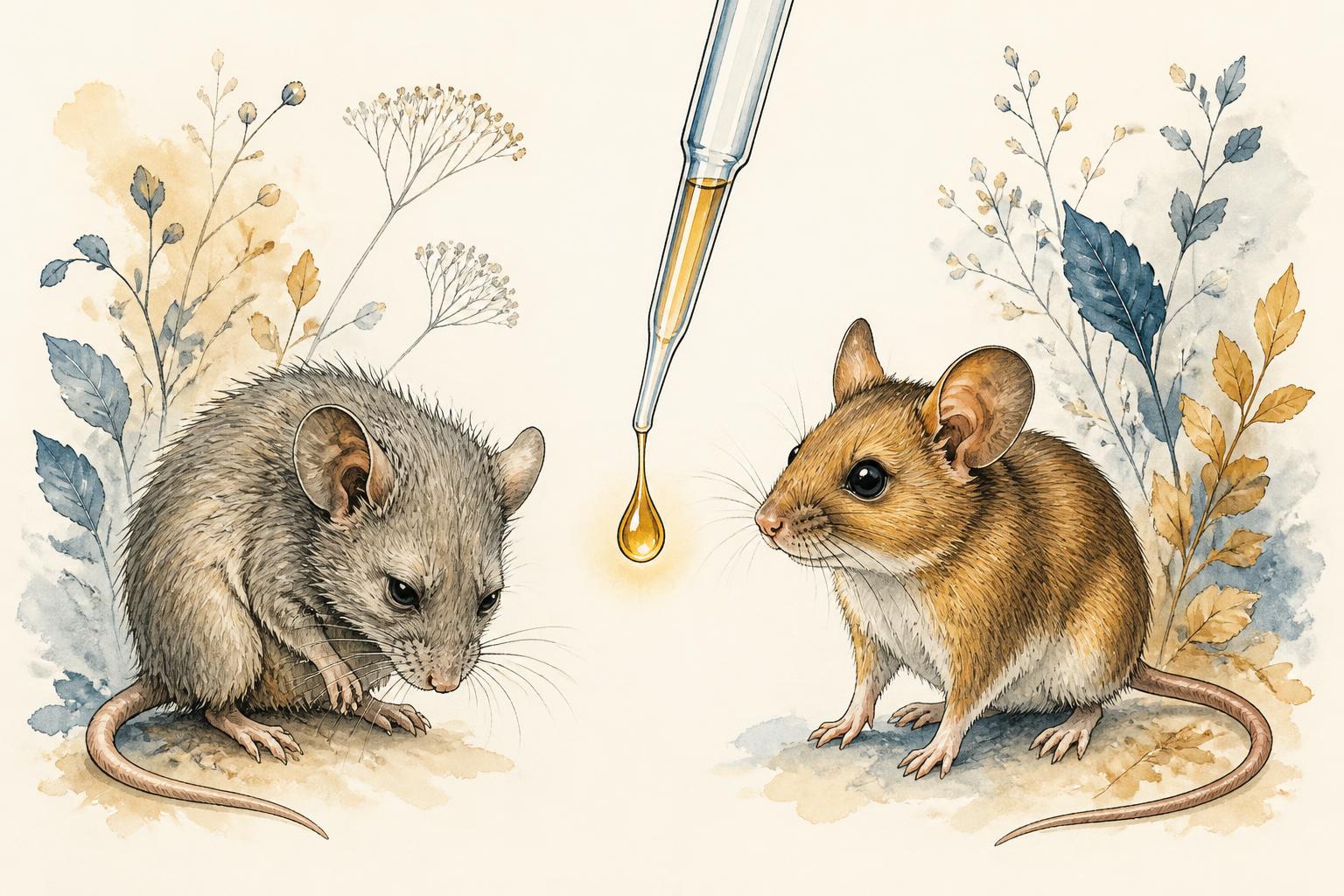
In 2024, a Stanford team showed that partial reprogramming restarts the production of new neurons in a key region of the adult brain. Concretely: the ageing brain generates fewer and fewer new nerve cells. After treatment, that capacity, without fully disappearing with age, was partially restored. Result in mice, not humans, an important nuance.
The most striking result remains the one from : 124-week-old mice (roughly 77 human years) treated with a gene therapy delivering these factors saw their remaining median lifespan increase by 109% compared with controls, with a clear improvement in their frailty scores. In an accelerated-ageing model (progeria), other treated mice gained an average 50% in survival, with several epigenetic markers of ageing halted or reversed.
One nuance worth stating as clearly as the results themselves: when the treatment stops, the signs of ageing come back. This is not a button you press once and for all.
The problem called c-Myc
Among the four factors, only one concentrates most of the concern: c-Myc, because it belongs to a category of genes called proto-oncogenes. These are perfectly normal genes, present in all our cells, whose role is, among other things, to activate cell division when the body needs it. The trouble starts when this gene malfunctions or becomes overactive: it then sends a permanent growth signal, with nothing to stop it. A bit like a stuck accelerator pedal. The cell divides without limit, and that is precisely what can trigger a cancer. So the question is: can we do without it?
The most solid studies of recent years, those of Stanford and Rejuvenate Bio in particular, use a three-factor cocktail, OSK: Oct4, Sox2 and Klf4. These three proteins are enough to trigger the reprogramming process, with less risk than the original quartet. c-Myc is deliberately left out. Other teams are exploring alternative combinations: pairing OSK with the TERT gene, the one that codes for , to slow without reintroducing the most problematic factor.
What remains open
What works in one cell type can be harmful for the neighbouring cell, in the same organ. Harmful, here, does not mean "less effective". It can mean cell death, tissue dysfunction, or cancer. No current approach allows robust partial reprogramming across an entire organism without either diluting the effect to the point of pointlessness, or putting some tissues at serious risk.
On the human-trial side, a first protocol targeting the brain recently received regulatory clearance in the United States. That is a real step. But the overwhelming majority of data available today are mouse results, and nothing in these figures points to a therapy available any time soon.
What to take away
The Yamanaka factors (OSKM) make it possible to reprogramme an adult cell into a pluripotent stem cell: this is the discovery rewarded by the 2012 Nobel Prize. Applied briefly and in a controlled way, they can rejuvenate certain cellular markers without erasing the cell's identity. In mice, the results on memory, frailty and lifespan are among the most striking in current ageing research, but the effect does not appear to last without ongoing treatment. c-Myc, one of the four original factors, is now largely dropped from protocols because of its potential cancer risk. Tissue diversity remains a deep, unresolved obstacle, and human data are still almost non-existent.
This topic has, to date, no practical translation for everyday life: no supplement, no protocol, no gesture to adopt. This page tells you where the science really stands. Not what should be done with it.
Going further
This article is educational and does not constitute medical advice. None of the approaches described is available in the clinic to date.