SIBO
Bacterial overgrowth in the small bowel. Breath test H₂ / CH₄ required.
Pimentel, ACG 2020

three entities not to be confused
Bloating, gas, irregular transit, post-meal pain. Three acronyms keep coming up: SIBO, SIFO, IBS. They describe very different realities, and mixing them up leads to off-target treatment. Here is the map, without shortcuts.
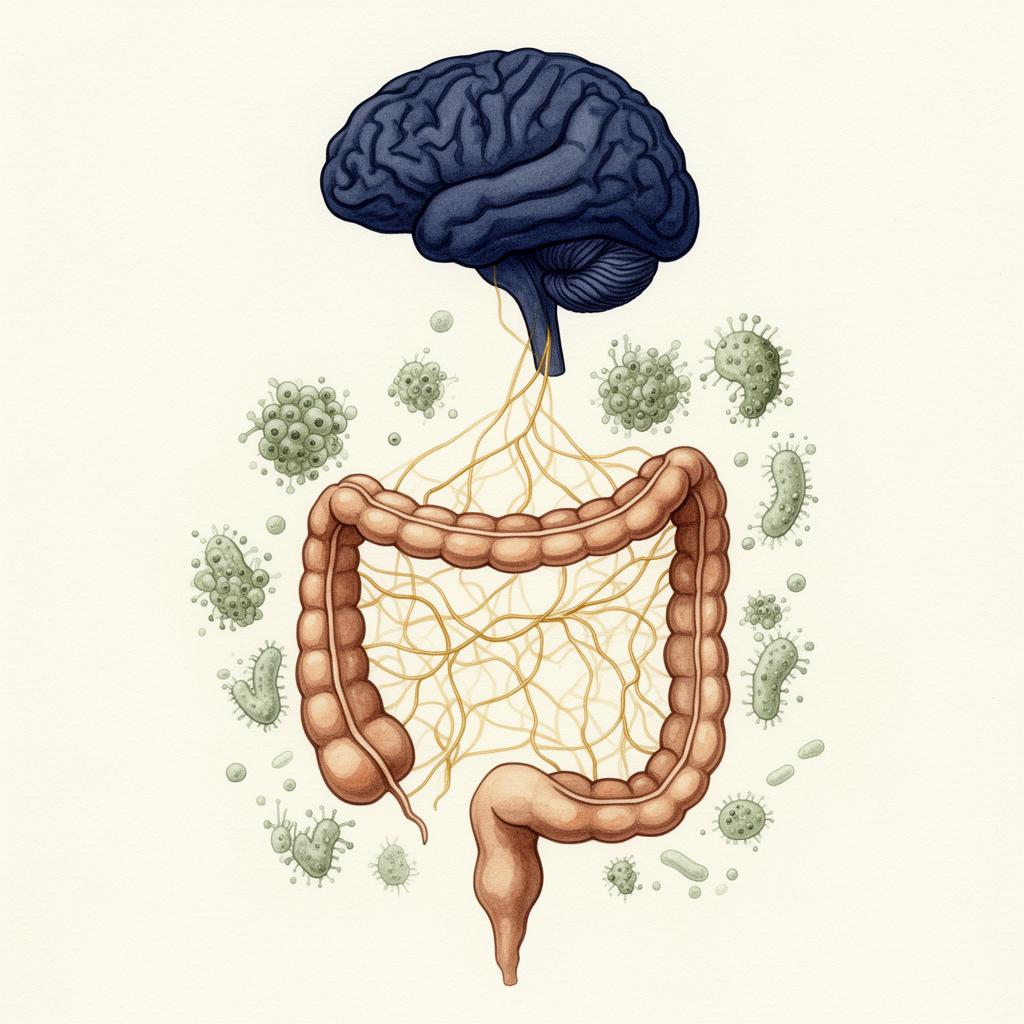
Bacterial overgrowth in the small bowel. Breath test H₂ / CH₄ required.
Fungal overgrowth, often Candida. Invasive diagnosis, under-recognised.
Functional syndrome, no overgrowth. Rome IV criteria, gut-brain axis.
About 31 % of IBS patients also have underlying SIBO, the majority do not.
40 to 60 % at 1 year if causes (motility, PPIs, anatomy) are not addressed.
Synthetic table. Overlaps exist: an IBS patient may also have SIBO.
See your doctor. No medical advice on Nutrilexic.
The small intestine is normally sparsely colonised: thousands to millions of bacteria per metre, against one hundred trillion in the colon. SIBO (Small Intestinal Bacterial Overgrowth) means an abnormal multiplication of bacteria in the small bowel, fermenting carbohydrates before they reach the colon. Hence early gas (within an hour after meals), bloating, and sometimes diarrhoea or constipation depending on the dominant gas (hydrogen or methane).
Diagnosis relies on a glucose or lactulose breath test measuring H₂ and CH₄. An antibiotic treatment exists, but without correcting causes (small bowel motility, long-term PPIs, anatomical abnormality, snacking that blocks the migrating motor complex), relapse is the rule.
SIFO (Small Intestinal Fungal Overgrowth) was described in 2015 by Erdogan and Rao: patients with digestive symptoms similar to SIBO, whose jejunal aspiration revealed abnormal fungal presence, most often Candida. The breath test does not detect it, since fungi do not produce measurable hydrogen or methane.
Diagnosis remains invasive (upper endoscopy with aspiration), scarcely available, and so SIFO is likely under-diagnosed. It should be considered with predisposing factors: repeated antibiotics, immunosuppression, poorly controlled diabetes, failure of a well-conducted SIBO treatment. Antifungals are prescribed by a gastroenterologist, not from an online anti-Candida protocol.
IBS (Irritable Bowel Syndrome) is not an overgrowth. It is a positive clinical diagnosis based on Rome IV criteria: recurrent abdominal pain at least one day per week over three months, associated with transit (change in frequency or stool consistency), with no alarm signs and after exclusion of organic causes.
No biological marker, no visible lesion: this is what radically distinguishes it from SIBO and SIFO. The main mechanism is now understood as a gut-brain axis disorder, with visceral hypersensitivity, vagus nerve dysregulation, and sometimes a post-infectious trigger. A 2020 meta-analysis shows that about 31 % of IBS patients also have underlying SIBO, but most do not.
The approach is multimodal and discussed with your doctor: 3-phase low-FODMAP (see our dedicated exploration), gut-directed hypnotherapy and CBT (high level of evidence), antispasmodics for pain, low-dose neuromodulators for their effect on visceral sensitivity, and vagus nerve work.
Diagnosing SIBO without a breath test, just 'because it bloats'. Prescribing an antibiotic for true IBS starves the microbiota for nothing. Conversely, blaming everything on stress and missing a SIBO in a patient with gastroparesis or long-term PPIs.
Adopting an online anti-Candida protocol for an undiagnosed SIFO. Maintaining a lifelong low-FODMAP for IBS and ending up with a starved microbiota. Three entities, three approaches, and a gastroenterologist to sort them out when the picture is complex.
The hub you just read sets the stage. Three gated explorations dig into where most people go wrong: choosing between rifaximin and herbs, building a rigorous protocol, and the post-eradication work that prevents relapse.
This exploration is educational. It does not replace medical advice, in particular a gastroenterology consultation for these three entities. Terms and conditions →
Ce site utilise des cookies et collecte des données (e-mails, progrès dans les explorations) pour améliorer votre expérience. Lire notre politique de confidentialité.