
When the gut speaks to the prefrontal cortex
The link between microbiome and ADHD is not a fringe hypothesis. It is a central research direction in 2025, with documented mechanisms on dopaminergic synthesis, neuroinflammation and the blood-brain barrier.
Content verified against PubMed, Frontiers in Psychiatry and Scientific Reports 2025.
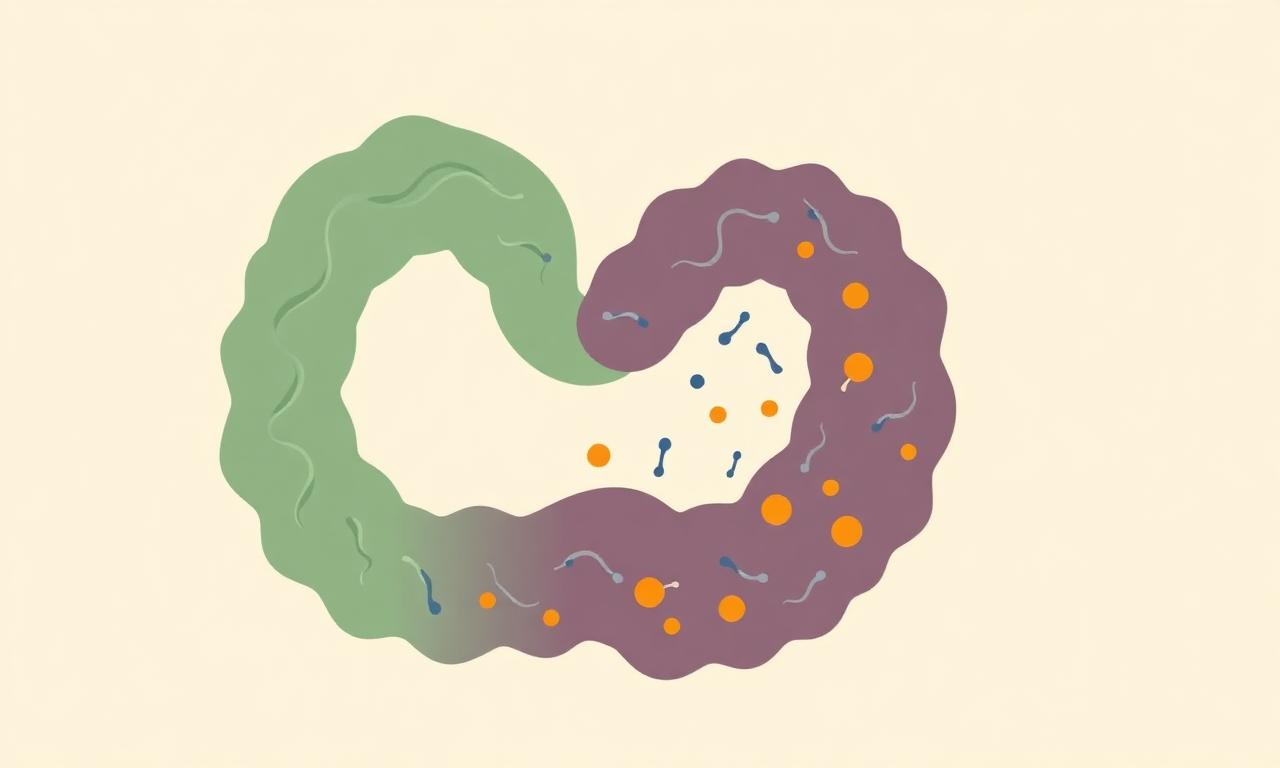
Several recent studies (Frontiers in Psychiatry 2024, Scientific Reports 2025) document a specific microbial signature in adults with : overrepresentation of Odoribacter and Eggerthella, underrepresentation of Faecalibacterium prausnitzii, one of the major producers. This signature correlates with markers of low-grade systemic inflammation.
Some bacterial genera produce phenolic compounds (p-cresol, indole-3-acetic) that interfere with dopaminergic signalling and . The is not the sole cause of ADHD, but it is a quantitatively identified modulator, and it is a target accessible to nutritional interventions.
Short-chain fatty acids (SCFAs) are produced by bacterial fermentation of fibres in the colon. feeds intestinal epithelial cells and maintains barrier integrity. Propionate and acetate, taken up into circulation, modulate systemic inflammation and neuronal signalling.
More precisely, SCFAs support expression of hydroxylase" data-lang="en">tyrosine hydroxylase, the rate-limiting enzyme of dopaminergic synthesis, and of , which regulates the serotonergic pathway. A poor in butyrate producers therefore generates fewer signals sustaining the monoaminergic pathways. This is one of the best-documented mechanisms of the in .
The is the major ascending communication route between gut and brain. It carries signals from enterochromaffin cells (which produce 90% of the body's ), from local inflammation, and from bacterial molecules (, SCFAs, lipopolysaccharides).
Altered vagal signalling shifts activation of the and of the (the stress axis). Working on vagal tone (slow breathing, graded cold exposure, preserved deep sleep) is one of the indirect but documented levers to support an brain beyond pharmacology.
The most recent data (Scientific Reports 2025) show that measurably alters the of treated adults: reduced alpha diversity, decrease in Ruminococcaceae (major producers), and lower faecal output. 'Destroy' is too strong, but the signature thins out in a direction that overlaps with what is already seen in untreated .
Clinically, this suggests that actively supporting the microbiome alongside methylphenidate is not a comfort measure but a strategy to preserve the neurochemical cofactors produced by bacteria. This is precisely the point that standard psychiatric care does not cover.
Documented nutritional levers are concrete:
- Fermentable fibres: inulin, FOS, GOS, pulses, semi-complete grains, root vegetables. Gradual increase to avoid transition dysbiosis.
- Polyphenols: berries, unsweetened cocoa, green tea, extra virgin olive oil. Growth substrates for Akkermansia muciniphila and Faecalibacterium.
- Fermented foods: kefir, raw sauerkraut, miso, kimchi. Live strain intake, contribution to diversity.
- Probiotic strains with data: Lactobacillus rhamnosus GG, Bifidobacterium longum 1714 (anxiety and stress), Lactobacillus plantarum DR7. Chosen according to profile, not as blind supplementation.
Effect is measured in weeks to months, not days, and consolidates with sleep and glycaemia cared for in parallel.
Found this article useful?
Share it with someone who might need it.
Go further
Frequently asked questions
- Does the microbiome really influence ADHD?
- Several recent studies (Scientific Reports, Frontiers in Psychiatry 2024-2025) document a specifically altered microbiome in adults with ADHD, with measurable consequences on neurotransmitter synthesis via SCFAs.
- Does Ritalin destroy the microbiome?
- 'Destroy' is too strong. The 2025 data show reduced microbial diversity and lower SCFA production under methylphenidate, which justifies parallel nutritional support, not stopping the medication.
- Are probiotics useful in ADHD?
- Some strains have early data (Lactobacillus rhamnosus GG, Bifidobacterium longum 1714). Targeted supplementation makes more sense than blind purchase; alimentary diversity remains the broadest lever.
- How long before microbiome work shows effect?
- Eight to sixteen weeks for measurable change, longer for consolidation. Sleep and glycaemic regulation in parallel speed up perceived results.
- Are fermented foods enough?
- They contribute, but rarely suffice on their own. Fermentable fibres (inulin, FOS, GOS) feed the bacterial growth substrates, polyphenols modulate composition. The combination matters more than any single food.